

SIMULIA

Evaluate performance, reliability, and safety virtually with leading FEA, CFD,and multiphysics simulation software
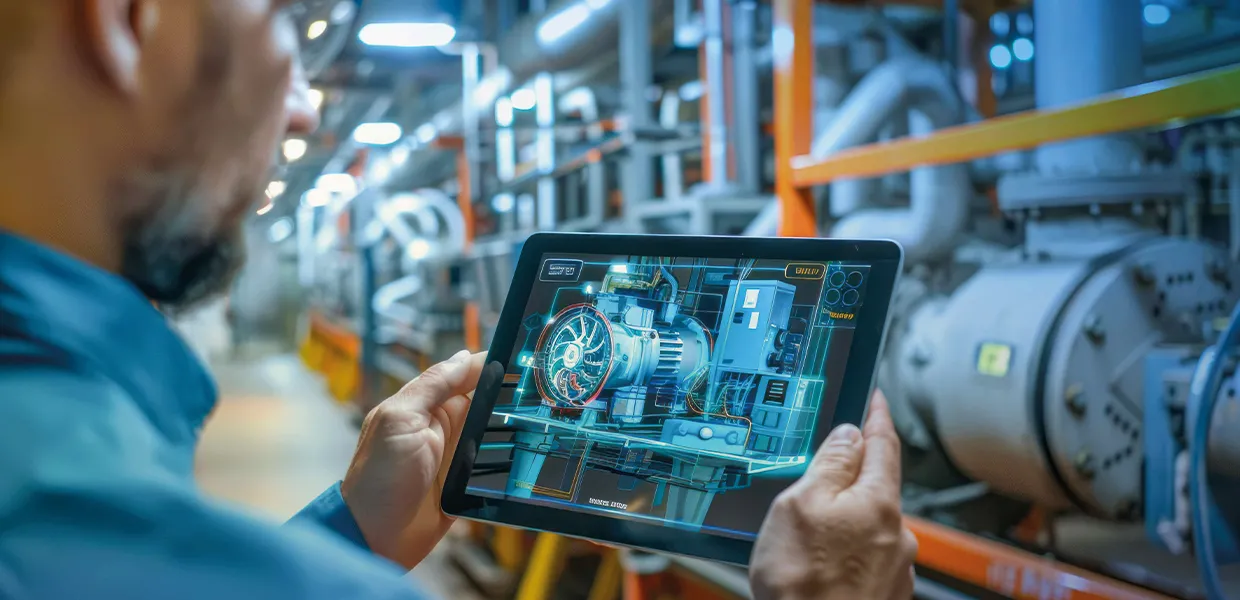
As the simulation portfolio of Dassault Systèmes, SIMULIA enables realistic analysis of the physical behavior of products and processes – long before a physical prototype is created. Companies evaluate performance, safety, durability, and robustness early in the development phase, laying the foundation for informed design decisions.
Based on state-of-the-art technologies such as the finite element method (FEM/FEA), computational fluid dynamics (CFD), and true multiphysics simulation, SIMULIA accurately replicates complex real-world conditions – mechanical, thermal, electromagnetic, or fluid dynamic. Engineering teams gain reliable insights, reduce risks, and accelerate innovation cycles.
In conjunction with the 3DEXPERIENCE platform, design and simulation merge in a common data environment (MODSIM). This creates digital continuity, avoids media breaks, and significantly reduces the number of costly physical prototypes.
At CENIT, we support you in strategically integrating simulation into your development process – so that you not only develop faster, but also make the right decisions from the outset.
What challenges does SIMULIA solve?
Modern products are becoming more complex: electronics, mechatronics, lightweight construction, sustainability, and regulatory requirements are increasing development pressure.
Typical challenges:
- Increasing performance targets
- Shortened development cycles
- High costs of physical testing
- Late error detection
- Multidisciplinary dependencies
With SIMULIA, you can analyze real-world stresses, thermal influences, flows, vibrations, and electromagnetic effects early on in the virtual model—and make informed decisions before manufacturing costs are incurred.
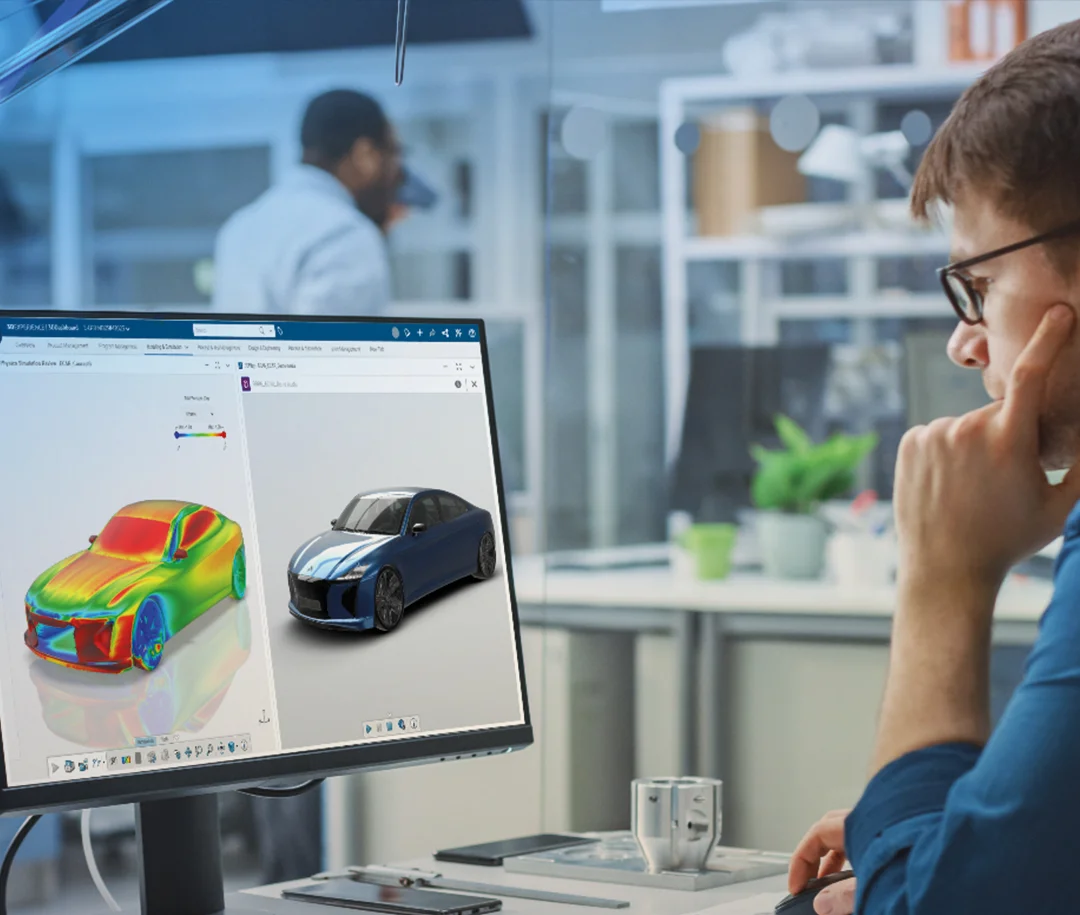
We will show you how SIMULIA can be optimally integrated into your development processes.
SIMULIA is used across a wide range of industries:

Integration into your system landscape
SIMULIA integrates seamlessly into existing CAD and PLM environments:
- CATIA
- SOLIDWORKS
- 3DEXPERIENCE platform
- PDM & PLM systems
MODSIM on the 3DEXPERIENCE platform combines modeling and simulation on a common data model. This prevents data silos between design, simulation, and production.
Which simulation disciplines does SIMULIA cover?
Structural simulation using the finite element method (FEM/FEA) enables realistic analysis of the mechanical behavior of components, assemblies, and complete systems under different load, temperature, and boundary conditions.
With SIMULIA, you can create virtual prototypes to evaluate key performance indicators such as stiffness, strength, safety, durability, and robustness at an early stage. This allows structural weaknesses to be identified before physical testing becomes necessary.
Nonlinear material models, complex contact conditions, and coupled physical effects enable the simulation of demanding real-world scenarios—from static and dynamic analyses to fatigue analysis.
- Accurate predictions under real-world conditions
- Early validation of safety and service life
- Reduction in physical prototypes
- Integration into CATIA, SOLIDWORKS, and 3DEXPERIENCE
- Accelerated product validation
Structural analysis portfolio:
SIMULIA Abaqus is a leading solution for linear and nonlinear structural analysis and is used worldwide for the simulation of complex mechanical problems. The software enables realistic modeling of metals, composites, elastomers, geomaterials, and other demanding materials—even under extreme load, temperature, and contact conditions. Thanks to comprehensive material models and flexible solver technologies, even highly nonlinear scenarios can be reliably analyzed and evaluated.
SIMULIA fe-safe extends your finite element analyses with precise multiaxial fatigue analyses. The solution evaluates the service life of components under cyclic loading and identifies critical weak points early in the development process. With direct connectivity to popular FEA systems such as Abaqus, fe-safe enables seamless integration into existing simulation workflows – for more durable products, reduced warranty risks, and informed design decisions.
SIMULIA disciplines:

SIMULIA Training
Deepen your expertise in numerical simulation with practical SIMULIA training from CENIT. From the fundamentals to advanced simulation tasks, our experienced trainers provide application-oriented knowledge in 3DEXPERIENCE SIMULIA, Abaqus, CST Studio Suite, and other SIMULIA solutions. Build targeted simulation expertise and use the full potential of the SIMULIA portfolio efficiently across your development and simulation processes.
CENIT added value & service
Simulation only unfolds its full potential in the right process context.
CENIT supports you in:
- Selecting the right SIMULIA solution
- Integration into existing CAD & PLM environments
- Establishing simulation-driven development processes
- Methodology and workflow standardization
- Individual training
- ITIL-compliant support
Our experts accompany you from strategy to operational implementation

The Next Step: Managing Complexity
Artificial intelligence has a significant impact only when it is integrated into existing processes. The necessary requirements are clear data structures, connectivity with existing systems, and a wide understanding of company´s processes.
CENIT helps you apply AI effectively in engineering, production, and enterprise management. This creates the potential to transform technology into a real competitive advantage for your company.
Let's shape your digital future together.

Villalobos Contact me now
Senior Account Manager Simulation